
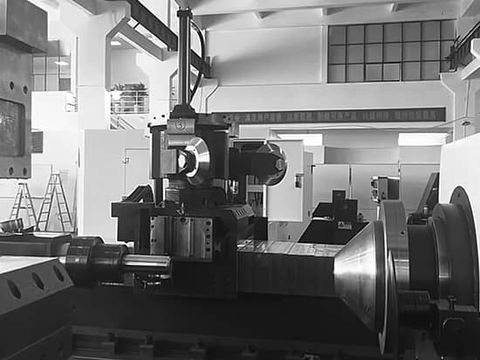
Main Features of Metal Spinning Technology
Metal spinning, also known as spin forming or metal turning, is a versatile metal forming process that transforms a flat metal disc or tube — called a blank — into an axially symmetrical part. As one of the most cost-effective sheet metal forming techniques available today, metal spinning is widely used across aerospace, automotive, energy, food processing, agriculture, and general industrial manufacturing. This article outlines the main features that make metal spinning and CNC metal spinning a preferred choice for engineers and manufacturers worldwide.
How Metal Spinning Works
In a typical metal spun operation, a flat circular blank is clamped onto a spinning lathe and rotated at high speed. A forming roller applies controlled pressure, gradually shaping the metal over a mandrel — the tool that defines the final internal geometry. The process can be performed manually by skilled craftsmen, or, far more commonly today, through automated CNC metal spinning machines that follow programmed tool paths for exceptional precision and repeatability.
Depending on the material and the complexity of the part, metal spinning can be carried out as a cold forming or hot forming process, making it suitable for everything from thin aluminum shells to thick-walled stainless steel vessels.
Main Features of Metal Spinning Technology
1. Seamless, One-Piece Forming
Unlike fabrication methods that cut and weld multiple pieces together, metal spinning forms the entire part from a single piece of material. The result is a seamless component with no joints or welds — eliminating common failure points and improving structural integrity, sealing reliability, and appearance.
2. Work Hardening and Superior Strength
The spinning action realigns the metal's grain structure and work-hardens the material. This increases strength, impact resistance, and fatigue life, meaning metal spun parts are often more durable than cast or stamped alternatives of the same material.
3. Low Tooling Costs
Because the process relies on a mandrel and rollers rather than expensive matched dies, tooling costs are significantly lower than deep drawing or presswork. This makes metal spinning economical for prototypes, low-volume custom runs, and high-volume production alike.
4. Wide Material Compatibility
Metal spinning works with an extensive range of metals, including:
- Aluminum and aluminum alloys (1060, 5052, 6061)
- Stainless steel (304/304L, 310S)
- Carbon steel
- Copper and brass
- Titanium and exotic alloys
Material malleability and ductility are the key factors for success, giving designers freedom to select the best alloy for performance, corrosion resistance, or conductivity.
5. CNC Precision and Repeatability
Modern CNC spinning lathes control rotation speed, roller pressure, and feed paths with computer precision. This delivers tight tolerances (down to ±0.1 mm on advanced machines), excellent wall-thickness control, and consistent quality across every part in a production run. CAD/CAM integration further streamlines the path from 3D model to finished component.
6. Design Flexibility and Rapid Prototyping
Metal spinning accommodates cylinders, cones, hemispheres, paraboloids, dished ends, funnels, and complex multi-contour profiles. Because design changes can often be made by refining the mandrel or adjusting tool paths — without building new dies — the process supports rapid iteration during product development.
7. Minimal Material Waste
Metal spinning is a chipless, near-net-shape forming process. Rather than removing material, it reshapes the blank, preserving material integrity and minimizing scrap — a clear cost and sustainability advantage over subtractive machining.
8. Excellent Surface Quality
Parts frequently emerge from the spinning operation with a smooth, high-quality surface that reduces or eliminates secondary finishing, especially when combined with in-process polishing.
9. Scalability from Small to Very Large Parts
From components just a few millimeters in diameter to industrial parts several meters across and up to 10–20 mm thick (depending on material), metal spinning scales to meet demanding heavy-duty applications such as pressure vessels, tank heads, and large ductwork.
Typical Applications
Thanks to these features, metal spinning is used to manufacture:
- Aerospace and aviation components
- Pressure vessels, tank heads, and dished ends
- UHV power transmission shielding enclosures
- Vibratory bowl feeders and centrifugal discs for automation
- Food-grade and sanitary processing equipment
- Agricultural hoppers, chutes, and guards
- Lighting reflectors, cookware, and architectural metalwork
Conclusion
The main features of metal spinning technology — seamless one-piece forming, work-hardened strength, low tooling cost, broad material compatibility, and CNC-driven precision — make spin forming one of the most flexible and economical metal forming solutions available. Whether you need a rapid prototype or a full production run of complex, high-tolerance components, CNC metal spinning delivers reliable, repeatable results.


