
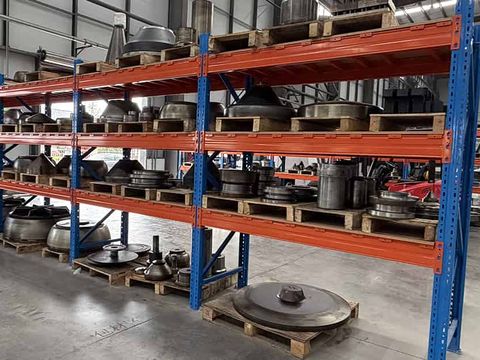
Spin Forming
Spin forming, also referred to as metal spinning, is an advanced metal forming process used to manufacture axially symmetrical components by rotating metal blanks at high speed while applying controlled forming pressure.
1. Process Definition
Spin forming, also known as metal spinning, is a precision metal forming process in which flat metal blanks or tubular preforms are plastically deformed over a rotating mandrel using controlled axial and radial forces.
The mandrel functions as a forming die, enabling the production of axisymmetric components with high dimensional accuracy, excellent surface finish, and repeatable geometry.
2. Manufacturing Process
The process is executed on CNC spinning lathes or manual spinning machines, and typically includes:
- Mounting of flat blank or preform onto a precision mandrel
- High-speed rotation of the workpiece (controlled RPM)
- Application of incremental forming forces via rollers or forming tools
- Progressive axial passes to achieve final contour and thickness distribution
Auxiliary support systems may include:
- Headstock / Tailstock configuration for axial stability
- Follower rest systems for thin-wall or large-diameter parts
This controlled deformation process ensures uniform material flow, minimal thinning, and tight tolerance control.
3. Key Technical Advantages
Spin forming offers significant advantages over traditional fabrication methods:
- High dimensional accuracy (tight tolerances)
- Superior surface finish (reduced post-processing)
- Enhanced mechanical properties (work hardening effect)
- Consistent wall thickness distribution
- High strength-to-weight ratio
- Reduced material waste (near-net-shape forming)
4. Material Compatibility
The process is compatible with a wide range of ductile metals:
- Stainless Steel (e.g., SUS304, SUS316L)
- Carbon Steel (e.g., Q235B, ASTM A36)
- Aluminum Alloys (e.g., AL1050, AL6061)
- Copper & Brass Alloys
Precise control of material flow allows for optimized tensile strength, fatigue resistance, and durability, even in demanding environments.
5. Typical Applications
Spin forming is widely applied across industrial, aerospace, and high-performance sectors, including:
- Pressure vessels & gas cylinders
- Industrial fittings and housings
- Satellite dishes & reflector components
- Aerospace structural parts
- Lighting reflectors and enclosures
Particularly in aerospace and energy industries, the process is valued for:
- Tight tolerance requirements
- Smooth aerodynamic or reflective surfaces
- High structural reliability
6. KMS Manufacturing Capabilities
At KMS, we integrate advanced CNC spin forming technology with full-scope fabrication capabilities to deliver high-performance components:
- Precision metal spinning (thin-wall & heavy-duty parts)
- Certified welding (AWS / ISO compliant)
- Secondary machining & finishing
- Structural assemblies and machine frames
- Surface treatments (polishing, coating, galvanizing)
We support custom OEM / ODM production, ensuring:
- Competitive pricing
- Fast lead times
- Strict quality control and traceability
7. Value Proposition
KMS is your reliable partner for high-precision spin formed components, delivering:
- Engineering-driven solutions
- Consistent product quality
- Scalable production capacity
RFQ – Get a Quote
- Precision Custom Metal Spinning Parts
- 👉 Upload your drawings and receive a quotation within 24 hours.


