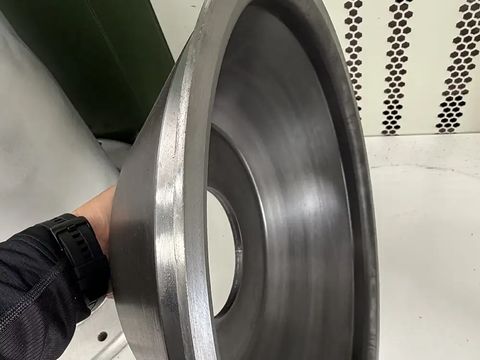
Q355B high-strength steel heavy-duty rear hub disc for mining machinery with precision stamped forming.

Tooling and Machine Calibration

Precise calibration ensures that every component operates at optimal performance, preserving material integrity throughout the metal spinning process.

Tooling and Machine Calibration

Accurate tooling and machine calibration are essential to achieving consistent, high-quality results in metal spinning. Proper calibration ensures that all components—spindles, rollers, mandrels, and control systems—operate within their specified tolerances, maintaining the structural integrity of the metal during forming. This process requires careful alignment and fine adjustment, particularly when working with large or heavy workpieces.

Even minor deviations in tooling geometry or machine settings can have a substantial impact on the final product. Slight misalignments or incorrect parameters may result in uneven wall thickness, surface defects, or localized structural weaknesses. Such defects not only reduce the visual quality of the spun component but can also compromise its mechanical performance and long-term reliability, especially in demanding industrial applications.

RFQ – Get a Quote

Tell Us Your Project Requirements

Upload your drawings and receive your quotation within 24 hours.

Related Videos

Stainless steel spinning processing

Stainless steel spinning processing

Spun Metal Parts, Metal Spinning Component, Deep drawing Metal Spinning and Deep Draw & Spinning Process including funnels, cones, hemispheres …

Q355D 19-layer variable diameter conical spinning part with sandblasted finish for stacked structural assembly.

Machine Wear and Tear

Spinning large metal cylinders significantly accelerates wear and tear on metal spinning equipment.

Precision 5A02-H112 aluminum spinning skin assembly for aerospace industrial applications with mirror finish.

Power and Force Requirements

Spinning large metal cylinders requires substantial power and forming force, far exceeding the capabilities of conventional metal spinning machines.

Metal Spinning Design Considerations

Maintaining Structural Integrity

Maintaining structural integrity during the spinning of large metal cylinders is essential to ensure the final product meets stringent industrial …

Achieving Dimensional Tolerances

Achieving Dimensional Tolerances

This challenge becomes even more pronounced for large-diameter cylinders, where increased size and mass significantly amplify process complexity.

TBEA standard 6061-T6 aluminum power transmission component with precision machining and aging treatment.

Handling Thick-Walled Cylinders

Spinning thick-walled metal cylinders is a highly demanding process that requires precise control of force, material behavior, and process stability …